In contemporary furniture, doors need to appear clean and true and keep functioning perfectly over multiple uses. This is especially true for large cabinet and wardrobe doors, where even the slightest distortion will impact the overall look. In those cases, a door straightener helps fix or prevent door deformity and keeps the look consistent in a neater package.
What Is a Door Straightener?
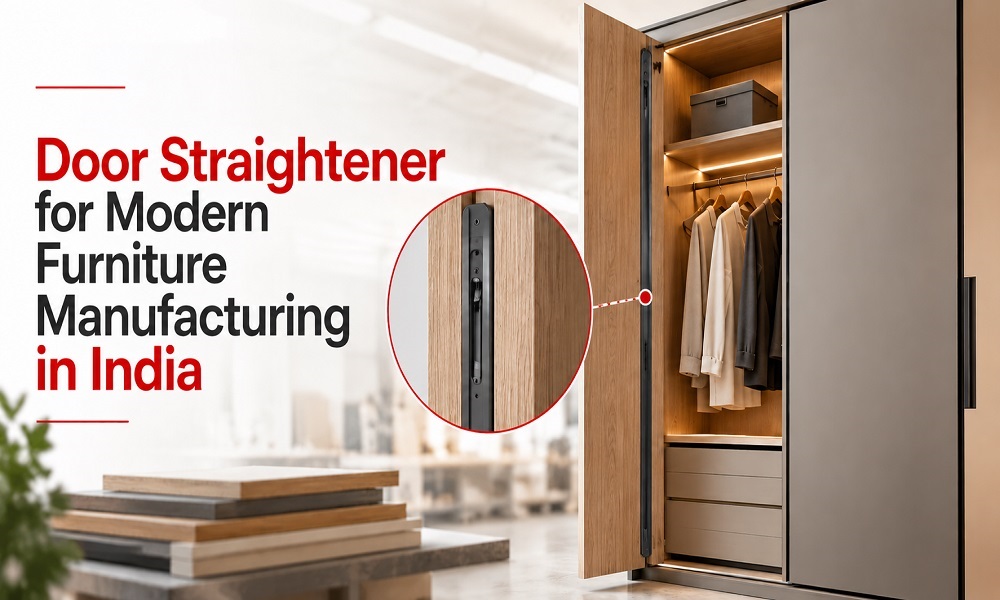
A Door Straightener is a piece of hardware mounted on the back of a furniture door that helps pull back or straighten a bent or warped door. This is especially helpful for larger doors, as changes in tension tend to be more noticeable.
Wood-based panels can respond to humidity, temperature and internal stresses. As a result, a door that appears perfectly flat during manufacturing may develop a slight curve later. A suitable straightening mechanism can provide additional support and help the panel retain its intended position.
Why Door Stability Matters in Furniture Manufacturing
Door planing is the process of adjusting the flatness of a door. This is an important step in ensuring a uniform and flush-fitting door.
For manufacturers, this can lead to:
- Uneven cabinet alignment
- Difficulty with hinge adjustment
- Visible gaps between doors
- Increased customer complaints
- Additional installation and servicing work
Using appropriate reinforcement at the manufacturing stage can reduce some of these issues and support a more consistent finished product.
Door Straightener for Different Furniture Applications
The need for a straightening system depends on the dimensions, material and construction of the furniture door. Large wardrobe shutters, tall cabinet doors and wide panels are common examples where additional support may be considered.
Before selecting a system, manufacturers should examine:
- Door dimensions: Larger panels generally require greater attention to stability.
- Panel material: MDF, particle board and other engineered materials can behave differently under changing conditions.
- Door thickness: The hardware must be compatible with the thickness of the panel.
- Installation method: The straightener should fit securely without interfering with hinges or other fittings.
- Adjustment requirements: A practical system should allow suitable correction during installation.
Choosing the Right Hardware
The effectiveness of a straightening system depends on more than its basic design. Manufacturing quality, dimensions and compatibility with the furniture panel all matter.
Furniture manufacturers should look for hardware that offers:
- Consistent construction
- Appropriate load and adjustment capability
- Reliable fixing
- Easy installation
- Compatibility with commonly used furniture panels
- A finish suitable for the application
Correct installation is equally important. Even a well-designed component may not perform as expected if it is incorrectly positioned or adjusted.
Koil India and Furniture Hardware
For manufacturers seeking dependable furniture hardware, selecting the right component supplier can simplify production and improve consistency. Koil India develops hardware solutions for modern furniture applications, with attention to functional design and manufacturing quality.
A manufacturer can discuss panel dimensions, material and application requirements with the supplier before selecting the appropriate solution. This is particularly useful for projects involving large wardrobes, tall shutters or customised furniture designs.
FAQs
What is the main purpose of a Door Straightener?
It helps counteract bending or warping in furniture doors and supports better alignment of the panel.
Which furniture doors may need a straightening system?
It is commonly considered for tall, wide or large cabinet and wardrobe doors, particularly when panel stability is a concern.
Can a Door Straightener prevent all types of warping?
No. Panel material, humidity, construction and installation can all influence warping. A straightening system is intended to provide support and correction, not eliminate every possible cause.
What should manufacturers check before selecting one?
Check the door’s dimensions, thickness, material, installation requirements and the adjustment range of the hardware. Compatibility should be confirmed before production or installation.